
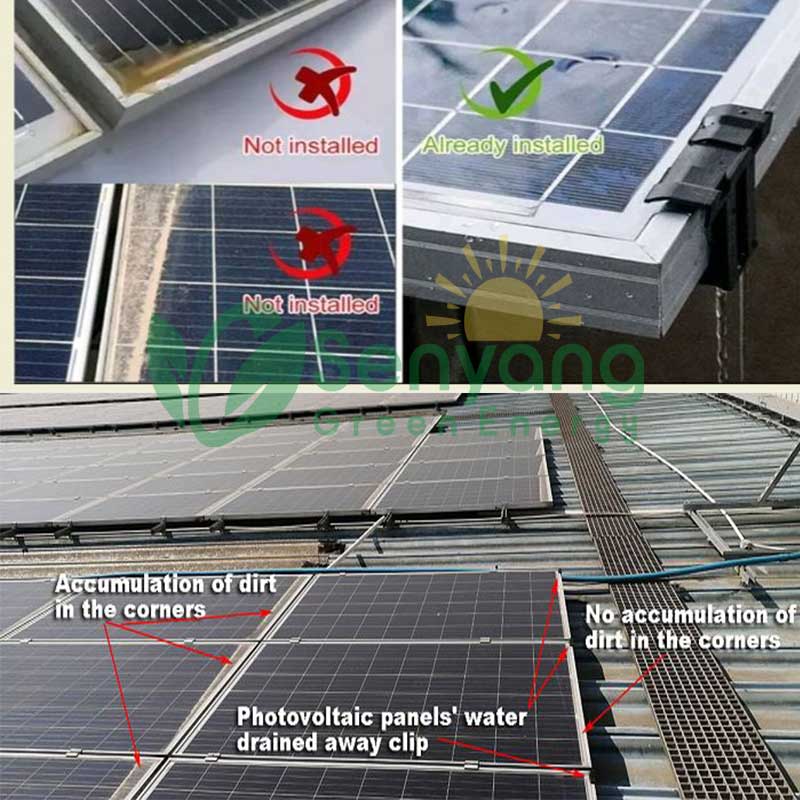
At first glance, these solar panels may look clean.
But a closer inspection reveals a critical performance issue:
👉 Mud and dust buildup along module edges and frames.
This is a hidden loss factor, especially in desert and high-dust regions , and it often goes unnoticed during routine cleaning.
🔎 Why does edge mud form?
- Aluminum frames act as dust collection barriers
- Morning dew + humidity bind dust into sticky mud
- Low / zero-tilt rooftops prevent natural self-cleaning
- Wind-driven sand continuously feeds the edges
Over time, this creates permanent soiling zones along the panel perimeter.
📉 Impact on System Performance
❌ Edge cell shading → current mismatch in the string
❌ Gradual but continuous generation loss (5–10%)
❌ Increased risk of hotspots and micro-cracks
❌ Higher cleaning frequency and O&M cost
❌ Reduced module lifespan
Small shaded areas can limit the output of the entire module or string.
✅ Proven Solutions & Best Practices
✔️ Maintain optimal tilt angle (avoid zero-tilt wherever possible)
✔️ Include edge-focused cleaning in O&M SOPs
✔️ Use soft brushing + low-TDS / RO water
✔️ Improve drainage paths to avoid water stagnation
✔️ Perform visual inspection after dust storms
🎯 Key Insight
Solar losses are rarely dramatic — they are silent, cumulative, and maintenance-driven.
Edge soiling may look minor, but its long-term impact on yield is significant.
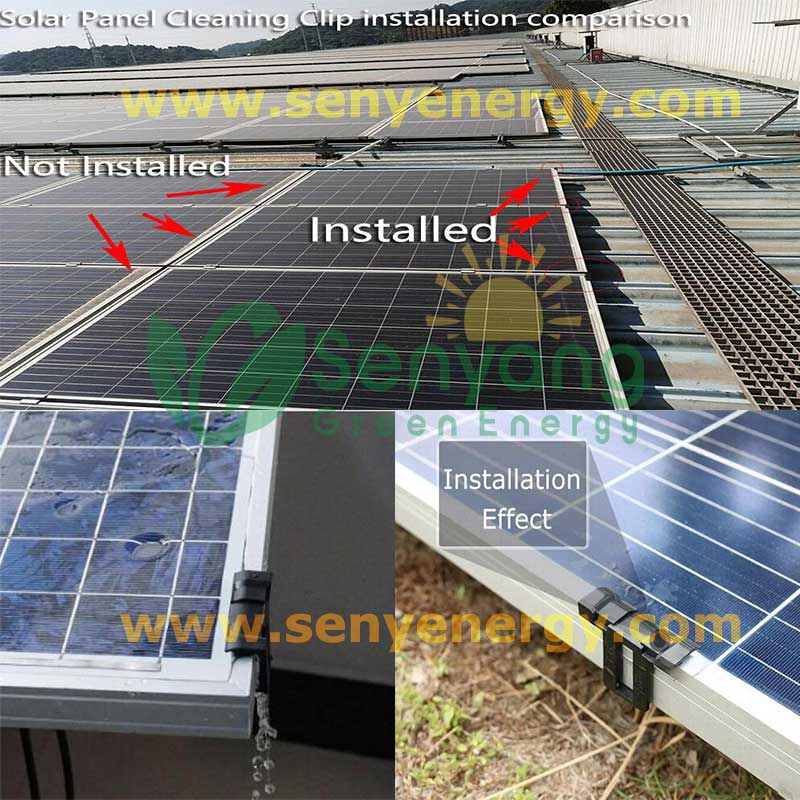
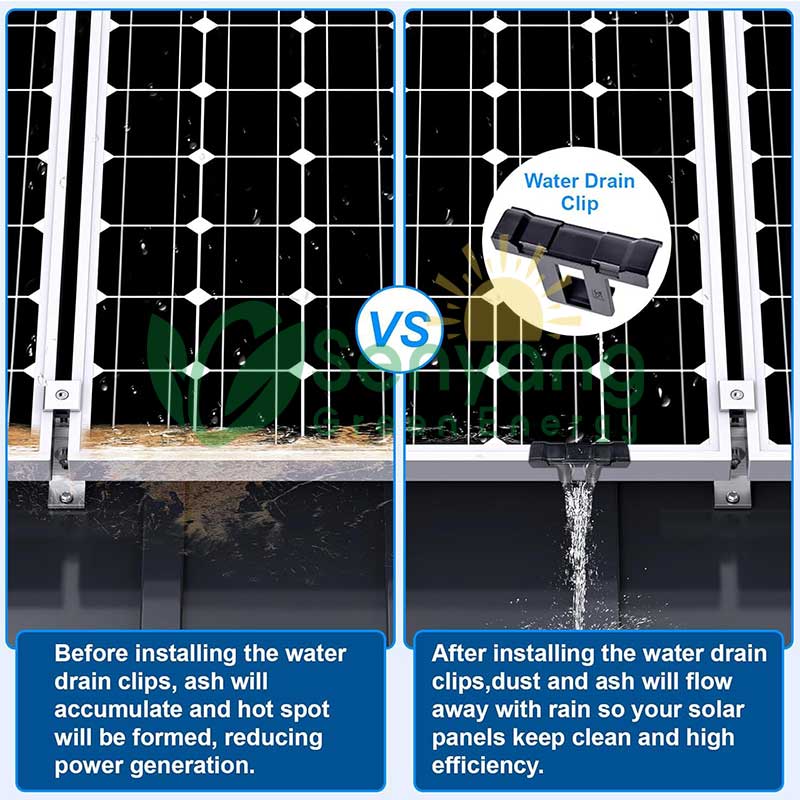
✅ Effective Solution: Water Drainage Clips
One of the simplest and most effective fixes is installing water drainage clips on the lower frame edge.
✔️ Allows trapped water to escape.
✔️ Prevents mud formation at panel borders.
✔️ Reduces edge soiling after cleaning.
✔️ Improves self-cleaning during rain or wash.
✔️ Low-cost, quick retrofit for existing plants.
SENYANG can support the Solar Panel Water Drainage Clips and also have more different types solar accessories
Para mais informações, consultar: www.senyenergy.com
Email:info@senyenergy.com
WhatsApp: +86 14700065579
 English
  Bulgarian
  German
  Spanish
  Portuguese
  French
  Russian
  Indonesian