
You’ve Seen Triangles on Flat Roofs. But Have You Seen This? The Untold Versatility of Solar Triangle Mounting Systems
If you’ve spent any time in the solar industry, you’ve seen triangle mounting systems.
They’re everywhere on flat roofs — row after row of tilted panels, held in place by ballast blocks, generating more energy than flat-laid arrays.
You’ve probably also seen them on metal roofs. The classic trapezoidal sheet, a few clamps, triangles neatly aligned.
But have you ever seen a solar triangle mounted on a galvanized steel walkway?
That’s where the story gets interesting.
The truth is, solar triangle mounting systems are far more versatile than most people realize. They’re not limited to flat roofs or metal roofs. They’re not even limited to “roofs” at all.
This guide explores the creative, unconventional, and endlessly adaptable applications of solar triangles — and why they might be the most underrated mounting solution in your inventory.
The Classic Applications (What You Already Know)
Before we venture into the unusual, let’s acknowledge where triangles already excel:
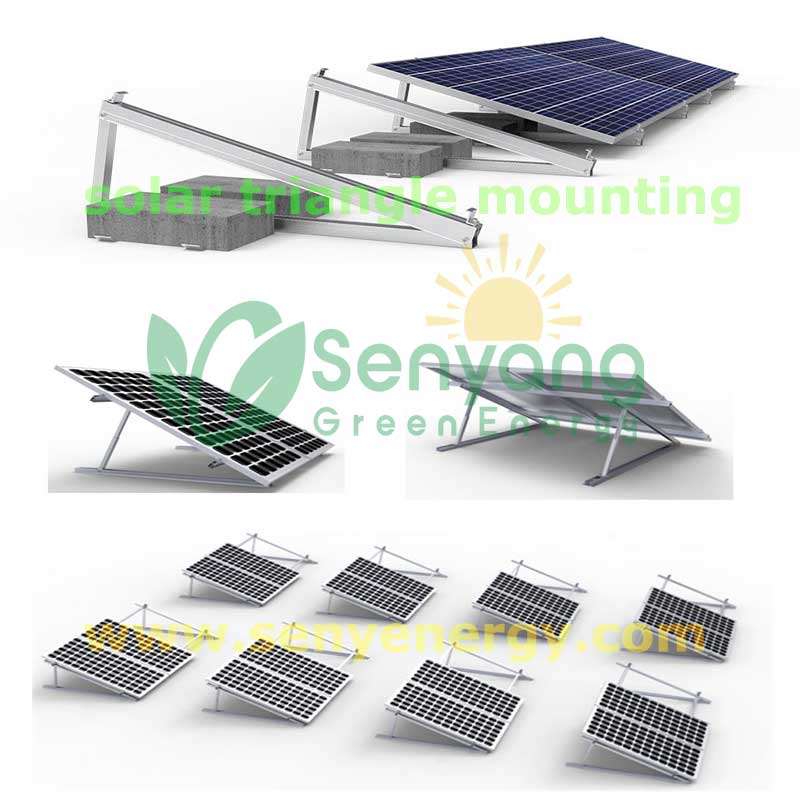
🔹 Flat Roofs with Ballast
The most common application. Triangles provide optimal tilt (typically 10-30°) without penetrating the roof membrane. Ballast blocks hold everything in place. Perfect for commercial buildings where roof warranties cannot be compromised.
🔹 Metal Roofs (Corrugated & Trapezoidal)
Direct attachment using clamps or self-drilling fasteners. Triangles elevate panels for better airflow and higher production. Ideal for warehouses, factories, and agricultural buildings.
These applications alone make triangles a valuable product. But they only scratch the surface.
Beyond the Obvious: Creative Installations That Work
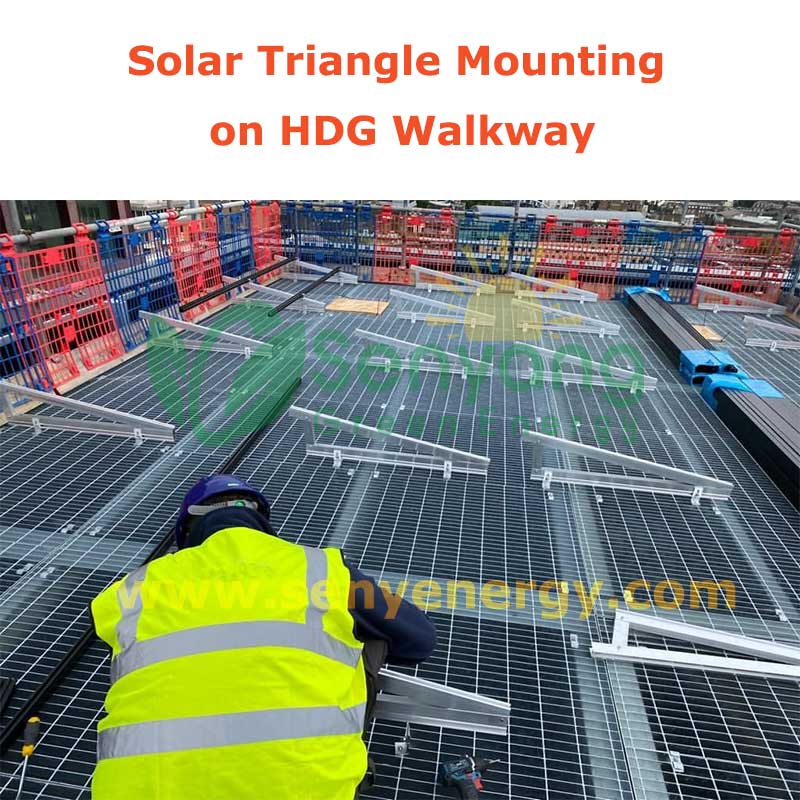
- Galvanized Steel Walkways (Yes, Really)
Imagine a solar installation where the maintenance walkway does double duty — not just providing safe access, but also supporting tilted panels above it.
This is not theoretical. We’ve seen installers mount triangles directly onto galvanized steel walkways, creating elevated solar arrays that:
Keep walkways shaded and cooler
Generate power from otherwise unused vertical space
Provide easy panel access from the walkway below
Protect the walkway surface from direct sun and weather
Why it works: Walkways are structurally designed for foot traffic. Adding a few triangles and panels is well within their load capacity. The result is a compact, dual-purpose system.
- Tile Roofs (Without Tile Removal)
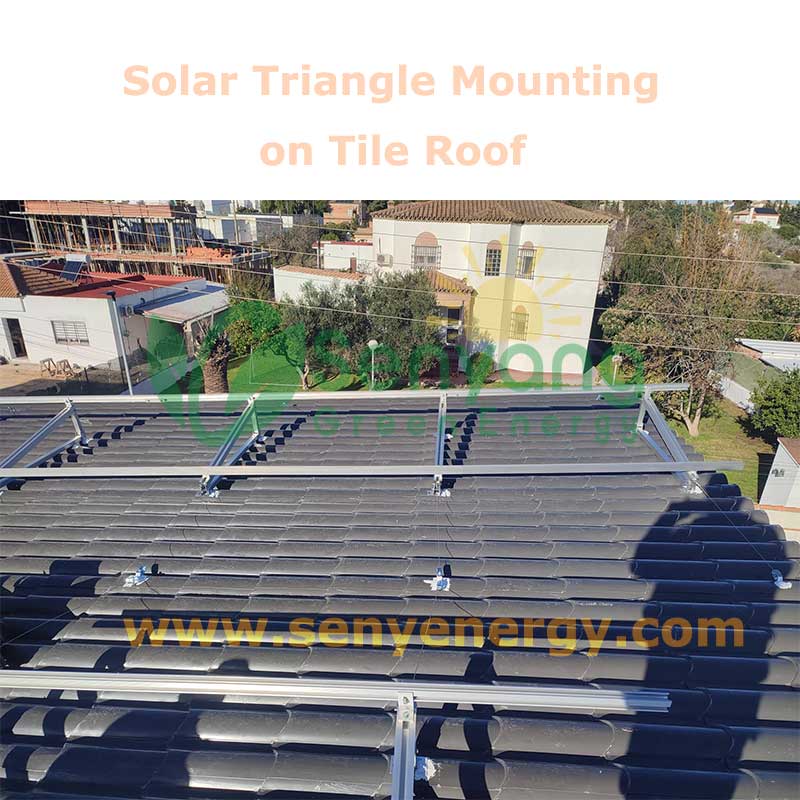
Tile roofs have always been challenging for solar. Traditional mounting requires cutting tiles, removing tiles, or using complex flashing systems.
Triangles offer a different approach.
By mounting triangles to the underlying rafters (through the tile gaps) or using specialized tile hooks, installers can:
Avoid cutting or removing tiles entirely
Distribute load across multiple rafters
Achieve optimal tilt without modifying the roof surface
Preserve the roof’s aesthetic and waterproofing
The key: Triangles elevate the panels above the tile surface, eliminating contact and potential damage.
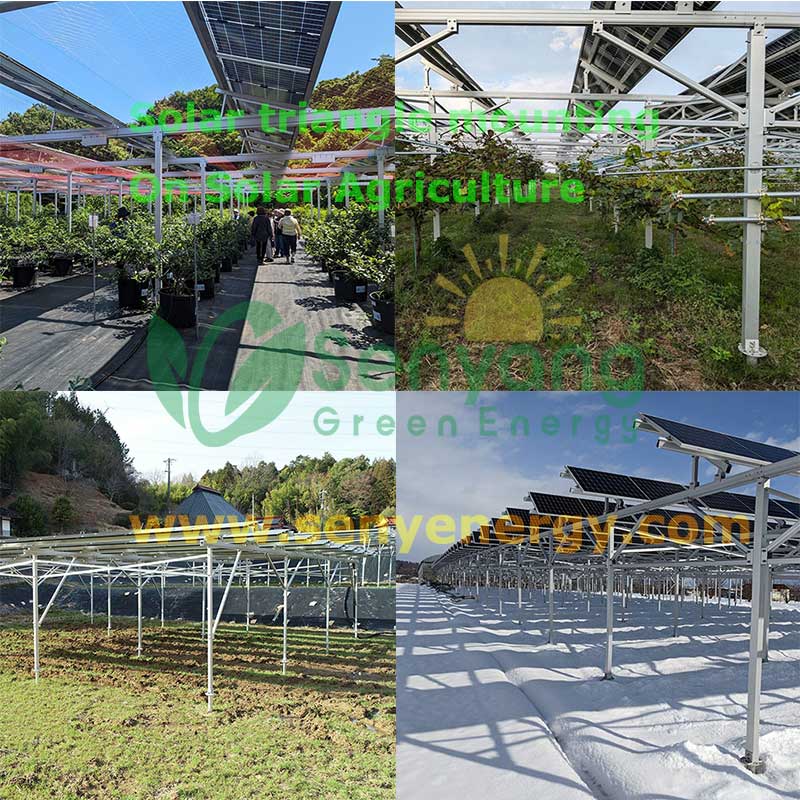
- Farm Sheds and Agricultural Buildings
Rural properties are filled with underutilized roof space. Equipment sheds. Hay barns. Livestock shelters. Grain storage.
These structures typically have:
Simple metal roofs (corrugated or trapezoidal)
Strong purlin spacing designed for heavy loads
No complex aesthetics to preserve
Triangles mount directly to these roofs using standard clamps or self-drilling fasteners. The result is solar that:
Powers farm operations (pumps, coolers, lighting)
Provides shade for equipment or animals
Generates revenue through net metering or feed-in tariffs
Requires no changes to existing structures
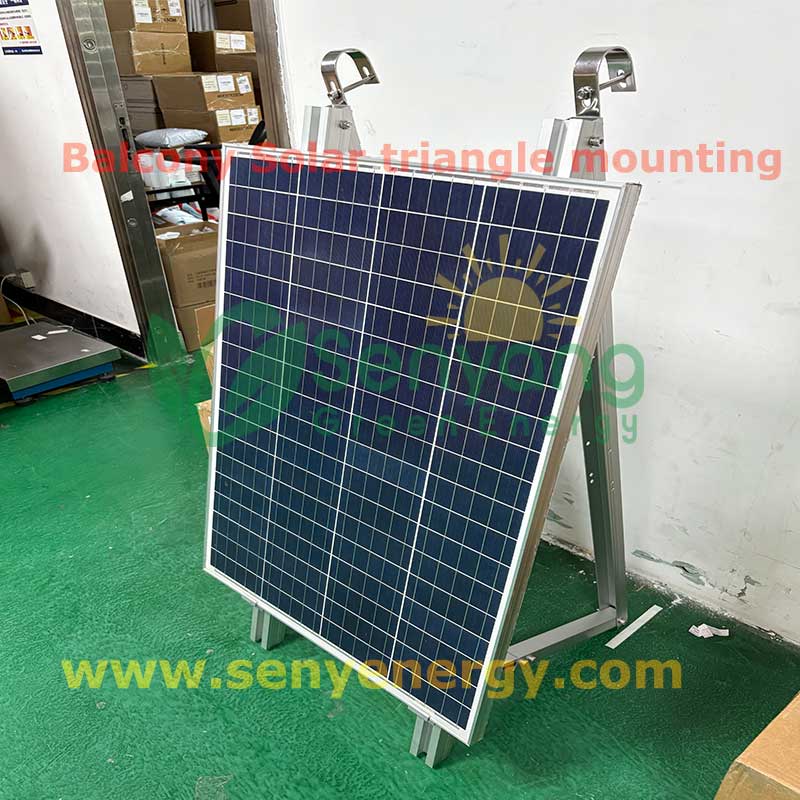
- Balconies and Urban Spaces
Not every solar installation needs a large roof. Millions of apartments, balconies, and terraces worldwide represent a massive untapped market.
Triangles scale down beautifully for urban applications:
Balcony rail mounting – Secure attachment using custom brackets, no permanent modification to the building
Small footprint – 1-4 panel configurations fit on most balconies
Adjustable tilt – Optimize for apartment orientation (south-facing ideal, east/west workable)
Lightweight materials – No structural concerns for residential buildings
Rental friendly – Easy to install and remove when moving
The urban opportunity: Many renters and condo owners want solar but believe they can’t have it. Triangles make it possible.
Why Triangles Work Everywhere: The Engineering Behind the Versatility
The secret to triangle adaptability isn’t magic — it’s thoughtful design.
🔹 Universal Base Compatibility
Triangles accept multiple attachment methods:
Ballast trays for flat roofs
Clamps for metal roofs
L-feet for tile and wood roofs
Custom brackets for walkways, balconies, and carports
🔹 Multiple Tilt Angles
Standard options include 10°, 15°, 20°, 25°, and 30°. Custom angles available. This covers everything from low-latitude summer optimization to high-latitude winter capture.
🔹 Modular Design
Triangles work as standalone units or linked rows. Mix and match configurations to fit any roof shape or size.
🔹 Material Choices
Hot-dip galvanized steel – maximum strength, cost-effective,extreme durability for harsh environments
Aluminum – lightweight, corrosion-resistant
🔹 Panel Compatibility
Accepts all standard framed modules (30-50mm thickness). No panel brand restrictions.
What’s YOUR next creative triangle installation?
Share your idea. Build it. Send us photos. We’ll feature the best ones in our application gallery.
DM me “triangle” for technical specifications, compatibility guides, and creative inspiration. 🔺
🌐www.senyenergy.com
📧 info@senyenergy.com
📞 Whatsapp+86 14700065579
#SolarTriangle #CreativeSolar #VersatileMounting #SENYANG #EndlessPossibilities
 English
  Bulgarian
  German
  Spanish
  Portuguese
  French
  Russian
  Indonesian